


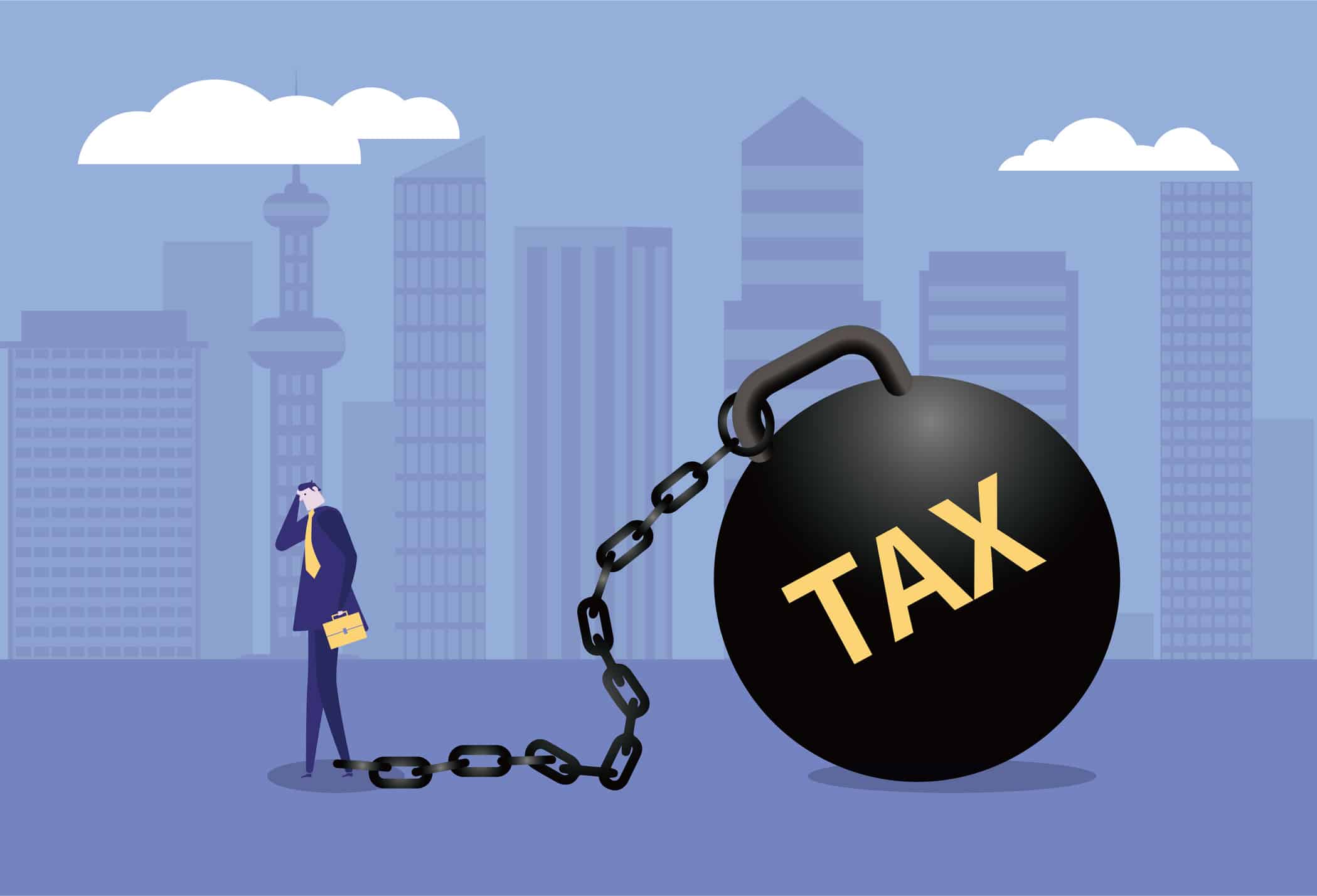
A Phil Hall Op-Ed: While most political observers are fixated on Tuesday’s elections in New York City, New Jersey and Virginia, there is a political storm brewing in advance of the 2026 elections that strangely received relatively scant national discussion. The center of this storm involves property taxes – or to be more specific, a revolt by homeowners against the onerous financial burden that these taxes create.
There is no shadowy Soros-style organization pumping money into this movement, nor is there a media operation mechanically whipping up the frenzy until it takes on a life of its own. This is a genuinely spontaneous eruption, parts of which are being orchestrated at a grassroots level while other parts are coordinated by savvy state legislators who listened to their angry constituents and are trying to respond with workable solutions.
This movement did not occur overnight – it has been percolating since the end of the pandemic when the country was left with an off-kilter economy and a housing market that reached new price peaks. By this time next year, the movement could easily be at the scalding point. Indeed, the vibe of this movement is reminiscent of the chant created by Peter Finch’s character in the film classic “Network”: I’m mad as hell and I’m not going to take it anymore.
“If this were happening at a different moment, this would be on the front page of every newspaper,” said David Schleicher, the Walter E. Meyer Professor of Property and Urban Law at Yale University’s Law School, who recently hosted a seminar on the subject. “It has been a little lost in the popular conversation, but it is a huge thing happening in the country. And if you talk to any political figure, anywhere in the country other than maybe New York or Los Angeles, they’ll tell you that property tax reform is one of the biggest political issues in their state or locality.”
At the moment, no elected official seems to have an idea on how to address this issue. Florida Gov. Ron DeSantis has repeatedly talked about abolishing property taxes all together, but he’s not provided any cogent explanation on how he would replace the revenue that would disappear if those taxes were eliminated. Another Republican governor, Mike DeWine of Ohio, took the easy way out by appointing a commission to study the problem and offer ideas to the state legislature – clearly, he didn’t want to be bothered with coming up with an answer.
Across the country, there have been half-measures to the property tax issue. Some states and localities have either provided or are considering exemptions to specific demographics – seniors, veterans and first responders are being offered up for special treatment, which is fine for them but unfair to households struggling to make ends meet. Some suggestions involve raising property taxes for the wealthier residents, but that’s just another tired retread of the class warfare baloney advocated by Bernie Sanders and his red brigade.
In Florida, seven different proposals are being put forth as potential constitutional amendments to be judged and voted on in next year’s election. But that state’s law requires 60% of voter approval to pass – in worst case scenarios, all seven will pass and create conflicting mandates or none of the seven will pass and the state is right back where it started.
It appears that most of the elected officials trying to come up with a sensible solution to lowering property taxes are Republicans. Few Democrats at the statehouse level are touching this subject, and some Democrat mayors in major cities are insisting that property taxes need to be raised to cover their hemorrhaging municipal budgets. Not surprisingly, the tax hike proposals are as popular nowadays as Joe Biden on the speaker circuit.
But, in some ways, this is a lose-lose situation for both parties. Democrats cannot afford to ignore the anger over property taxes, especially in states that began transitioning from blue to purple in last year’s Trump landslide – this is a kitchen table subject that is alien to today’s Democrats who are obsessed with Trump-bashing and unpopular social issues. Yet Republicans are also going to antagonize voters if they stall on the issue, as in the case of Ohio’s Gov. DeWine, or if they come up with unsatisfactory approaches, such as the surplus number of conflicting ideas that are being floated in Florida.
And the real losers are the homeowners who are being stuck with ridiculously high property taxes and no path to relief. This uncomfortable situation could easily disrupt potential home sales into 2026 – after all, who wants to buy a house that is already ridiculously overprices and then get stuck with wretched property taxes that will further gnaw away at the household’s earnings?
What do you think the solution to this dilemma could be? Share your responses in the comments section below and let’s start a conversation on the subject.
Phil Hall is editor of Weekly Real Estate News. He can be reached at [email protected].















Force the local government to be cut in half. There is so much waste! Government is way too big. Cut it down to size and eliminate the need for such high property taxes.
Homeowners should NOT have to rent their homes back from the government.
Raise sales tax. Everyone will be paying. I have heard that some states have charged more for car tags/registration in lieu of raising property taxes.
The problem with raising sales tax is that it is regressive. Those in lower income brackets tend to spend more of their income than those in higher income brackets. It will also result in those who are lower income having less money to pay for their necessities. Let’s not forget that services tied to property taxes are more than just public school funding. There are the police, fire, emergency, etc, as well as road and infrastructure repairs for the city. I do agree that some kind of reform needs to be made, but unilaterally abolishing property taxes without a good, strategic plan to replace that revenue is not the best idea. Everyone contributes to property taxes one way or another; renters contribute through their rent payment, and homeowners pay too. While it may seem like you’re “renting” your home after you pay it off, you’re actually contributing to your community amenities and resources, which are needed if you want those services to continue.
School taxes should not be tied to Real Estate. Let the people who use the school system pay for it. This would relieve the burden on senior citizens tremendously and allow them to stay in their homes.
The counties are flush with cash from higher assessed values from skyrocketing home prices from 2019-2024. The municipalities have been spending money left and right like drunken sailors! Reforms are needed. Indiana went thru this in the early 2000’s. Governor Mitch Daniels had a 1% property tax cap put on all owner-occupied homes, 2% on residential rental properties and 3% on commercial and industrial properties. Home owners still can get a $45k homestead credit on assessed values too. This model works and should be duplicated in other states. The sales tax was raised to 7% to offset some of the lost property tax revenues. The state took upon themselves to fund schools for the most part too. So other taxes going into the general fund are redirected to school funding. Florida needs a max of 2 property tax reforms on their election ballot. Seven is ridiculous. Yes, there is a brewing underground revolution across much of this country occurring on getting unbelievably high property taxes reformed. Democrats hate to lower any taxes. It’s the Republicans, which I gladly call myself, that are leading this charge. This could be another situation that will make more people come over to our conservative cause.
I agree with all comments. I’m in the process of selling my home and plan to rent
vs buy. Just tired of paying $15k per year property taxes. My solution is that my city is way overspending plus our state is overspending. We as homeowners know (at least some of us know) you can’t continue to spend beyond what you make.
Has there ever been a study on how many percentage points of higher sales tax it would take to cover the complete removal of property taxes?
Immediately remove the status Sanctuary states and cities./ Why should Citizen tax payers in any way or any form be responsible for ILLEGALS. Deport all ILLEGAL, Citizens First .
Why do home owners pay taxes based on the properties value year after year.,when salaries do not increase at the same rate … this whole system is ridiculous it needs to be challenged .
I believe each county need to lower cost, to much burocracia, when that happens taxes need to be lower.
I say, let’s do an in depth analysis of all government budgets. Once we really see what is in there I’m sure there will be a lot of comments on what to cut out. Let’s apply some common sense – do we really NEED that!
I agree with most of the comments. The problem is not Revenue its expenses, it’s always easier to spend other people’s money. There’s no accountability.
I also agree that our city, county, and state budgets need a heavy dose of common sense applied to rein in unnecessary and wasteful spending. Homeowners are struggling to manage their ever-tightening household budgets, while hanging on to the American Dream of Home Ownership. Government needs to tighten, and learn to stay within their budgets, too! A place to call “home” is not only a basic human need for shelter, but is also a key component of building stronger, more stable families, which are the foundation for building stronger communities, and our country, as a whole. Skyrocketing property taxes are undermining these crucial goals, placing unfair financial stress on homeowners, and robbing our citizens of the peace & pride that comes from home ownership. When you understand the bigger picture, you understand that property tax reform is non-negotiable at this point. I do not know what the best solution is, but our elected officials need to work together to serve the best interests of the citizenry that voted to allow them the honor and privilege to protect and serve our country.
County Appraisal districts skewing property appraised values to compensate for higher property taxes to cover their broke school districts & infrastructure programs. Way too many getting overpaid, the is out of control!
Government spending is out of control. The little town of Largo Florida, with a population of 85,000 MOL, is building a mix use city hall 100,385. First and foremost, why is Largo city government getting into the retail and mixed-use business? Normally this falls into the private sector, not a government entity. The breakdown is a combination of retail-mixed use of 18,000 sq. Ft. Mol the remainder of 82,420 sq. Ft. Is for municipal use. That equates to almost 1 sq.ft. Per resident. I can think of no other example that exemplifies government spending out of control other than Largo Florida. It is ridiculous and absurd that the small towns build my moments unto themselves.