


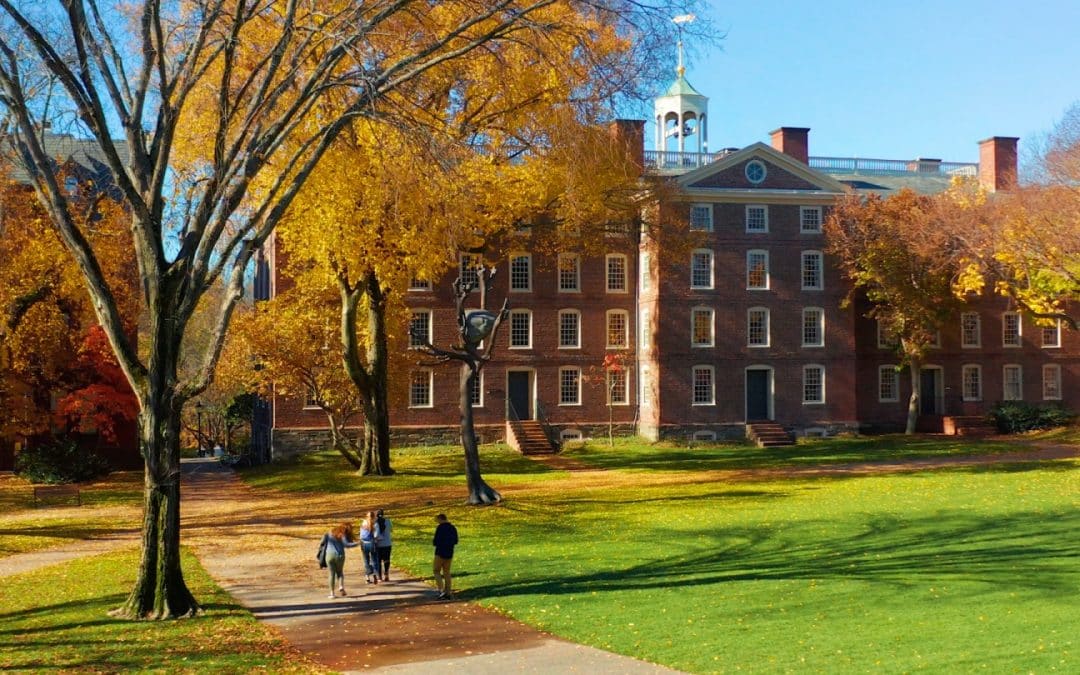
Brown University has transferred 255 acres in Bristol, Rhode Island, to a preservation trust established by the Pokanoket Indian Tribe.
WPRI reports the property has been home to the Haffenreffer Museum of Anthropology and a center for educational programs and field research. Russell Carey, Brown University’s executive vice president for planning and policy, noted the Haffenreffer family’s donation of the land included a letter declaring that the “Trustees of an institution like Brown will not be unmindful of the property’s great natural beauty, its historical background or the best interests of the Bristol community.”
However, the property is also the ancestral land of the tribe, which participated in the first Thanksgiving in 1621. The land was the home and death site of Pokanoket leader Metacom (King Philip) during the 1675-1676 conflict between indigenous populations and English settlers that became known as King Philip’s War.

“This land is special to us and we can now take care of it the way the Creator intended for us to do so,” said Pokanoket Tribe Chief Sachem Dancing Star said.
The Haffenreffer Museum’s collections will be moved to Providence next fall, while the facilities at the site are expected to be vacant by the summer of 2026.
Brown is also selling approximately 120 acres separate from the Mount Hope property to the town of Bristol.
“The sale of these parcels, which we expect to be finalized early in 2025, to the town of Bristol for preservation and conservation will ensure that no development occurs on them and further protects and buffers the land being placed in the preservation trust,” Carey said.
Photo courtesy of Brown University










Good evening,
I’m writing to clarify several inaccuracies in your recent article titled “Brown University Transfers 255-Acre Parcel to Pokanoket Indian Tribe.”
First, the Pocasset Wampanoag Tribe of the Pokanoket Nation, which is referenced in both the article and accompanying image did not receive the 255 acres of land from Brown University. Nor were they involved in the protest actions and negotiations that led to the land arrangement.
The land was transferred to a trust following years of advocacy and protest led by the Pokanoket Tribe (also referred to as the Pokanoket Nation), under the leadership of William “Winds of Thunder” Guy. The Pocasset Wampanoag Tribe of the Pokanoket Nation is an entirely separate and unaffiliated organization.
Additionally, the image used in the article does not depict members of the Pokanoket Tribe. If the photo is intended to represent individuals involved in the land transfer, it is inaccurate, as it shows members of the Pocasset Wampanoag Tribe of the Pokanoket Nation, who as noted were not participants in the protest nor recipients of the land.
Referring to the land recipient as the “Pokanoket Indian Tribe” while using imagery of a different and unrelated group contributes to confusion and misrepresentation of both parties. While both groups use the term “Pokanoket” in their names, they have different leadership, histories, and cultural identities.
Out of respect for accuracy and the distinct identities of these Indigenous organizations, I respectfully request that the article and image caption be updated to reflect these corrections.
Thank you for your attention to this matter. Please feel free to contact me if you need additional sources or clarification.