


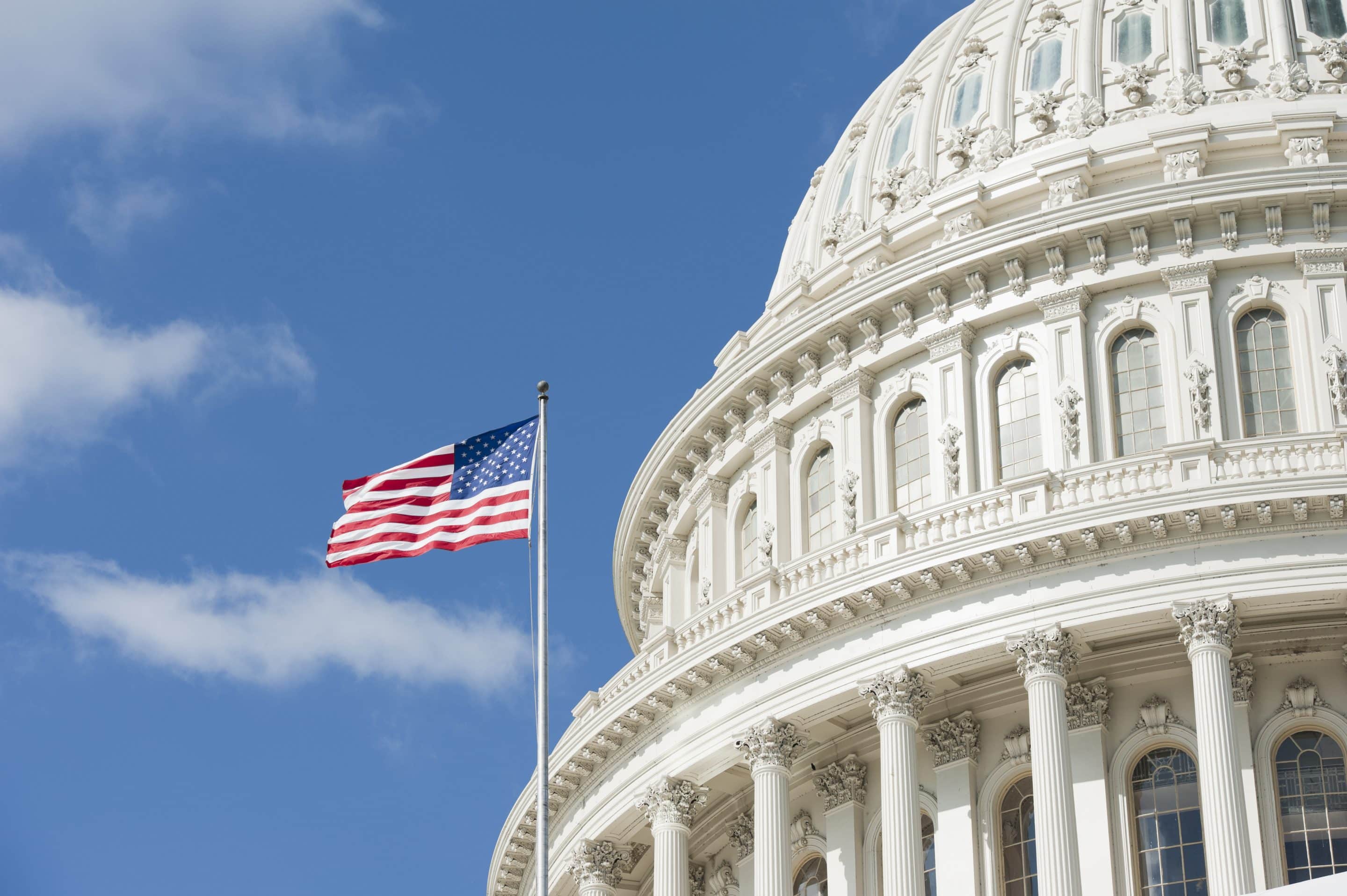
In a political climate dominated by division, dysfunction, and finger-pointing, something extraordinary just happened in Washington: Republicans and Democrats actually came together—and unanimously passed a housing bill that might move the needle in the right direction.
Yes, you read that right.
As reported by Phil Hall of Weekly Real Estate News in his recent article “Senate Banking Committee Unanimously Approves Bipartisan ROAD to Housing Act”, the Senate Banking Committee just gave a unanimous thumbs-up to the Renewing Opportunity in the American Dream (ROAD) to Housing Act of 2025.
This isn’t just political theater. This is a real, tangible step toward tackling the housing crisis—and not with more bloated bureaucracy or failed federal handouts. This bill focuses on removing government-created barriers, increasing housing supply, and promoting affordability with actual free-market solutions.
Here’s Why This Bill Deserves Attention
The ROAD to Housing Act includes more than 40 proposals aimed at expanding and preserving housing across the country. It promotes the use of modular and manufactured housing, cuts down on outdated regulatory red tape, enhances coordination among housing programs, and—importantly—expands opportunities for veterans to access the American Dream of homeownership.
Senator Tim Scott (R-SC), who chairs the committee, called it a “leap in the right direction.” He’s not wrong. For years, Congress has been sitting on its hands, wringing them while housing prices soared, inventory shrank, and middle-class families were priced out of their own neighborhoods.
This bill acknowledges a hard truth: Washington has often been the problem—not the solution—when it comes to housing.
When Warren and Scott Agree, Pay Attention
Even Senator Elizabeth Warren (D-MA), who rarely sees eye to eye with conservatives, praised the bill’s bipartisan nature. That should tell you just how urgent the crisis has become—and how broad the support is for real action.
But let’s be clear: this isn’t about more regulation. It’s about getting government out of the way, unleashing innovation in housing construction, and finally allowing the private sector to do what it does best—build and deliver value.
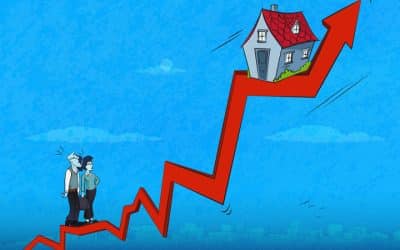
As I say in my recent video titled “Finally—A Bipartisan Housing Bill That Actually Makes Sense,” this is a moment where Congress didn’t just kick the can down the road—they actually picked it up and moved it forward.
Watch the full breakdown here
A Real Opportunity for Real Estate Professionals
For those of us in the trenches—real estate agents, lenders, brokers, investors—this bill is long overdue. The market has been starved for inventory. Consumers have been squeezed by a toxic mix of inflation, high interest rates, and lack of options.
This act could ignite the kind of development we’ve been calling for: affordable housing without sacrificing quality, and policy that supports builders and buyers—not just bureaucrats.
It’s also a major win for our veterans. As someone who believes deeply in serving those who’ve served us, I’m proud to see legislation that acknowledges their sacrifice with expanded homeownership opportunities.
What Happens Next?
The ROAD to Housing Act now heads to the full Senate for a vote. While nothing in Washington is guaranteed, the overwhelming bipartisan support it received in committee gives us reason for cautious optimism.
Let’s hope this momentum continues—and that Congress follows through with more action and less posturing. Because for once, we have a bill that doesn’t just sound good—it actually makes sense.
About the Author:
John G. Stevens is the former President of the National Association of Mortgage Brokers (2017–2018), a real estate industry leader, entrepreneur, and founder of WRE News and WRE Benefits. He is a regular contributor to Weekly Real Estate News and an advocate for smart, common-sense solutions to America’s housing crisis.
















This bill will help, as long as the usual usurpers are not allowed to steal the money Congress allocates to help US citizens.
As usual, whenever a bill with money attached passes, the greedy horde, scammers, and kickback crowd line up and steal most, if not all, of the funds.
Hopefully, this bill will not end up being just another feeding trough for the aforementioned.
I am all for our government getting involved with the housing market. This proposed ROAD program sounds promising, especially because our brave veterans are in the mix. However, as I have seen before; government programs set too many restrictions making it difficult to qualify. I hope this plan is more straight forward with no “ifs and buts.” Income restriction is one of the biggest roadblocks. In other words, let’s not make this program about “low-income earners only.” Coming up with the down payment and closing cost is what keeps buyers on the fence. And now with the recent NAR lawsuit; buyers are “obligated to pay their agent’s commission if the seller won’t pay. It shouldn’t matter how much you earn- short of being a millionaire. Let’s keep it simple. I.E. good income, good credit, seasoned employment, and perhaps a little money as a good faith commitment. I won’t get into lower mortgage interest rates; that will eventually happen at a future date.
I’ll follow this however I want to see the problem of big companies buying up real estate, SOLVED. Is this in this bill????
Yes Kelli, you said it.
About 30% of the homes for sale are purchased by investors, often MEGA investment groups, with some owning thousands of homes, some buying up every home in a newly build suburb.
I don’t mind smaller investors buying rentals for their income stream and their retirement fund (many people have NO pension).
I do object to individuals (either buying in their name or thru investment groups) buying up hundreds, even thousands of housing units.
In California, ONE single family owns 22,000 rental units. That’s crazy.
That kind of hoarding of the rental market in the hands of a few people is driving up housing costs and rental costs too.
Realtors and lenders often complain about high interest rates being the obstacle to affordable housing. but it is impossible to force the Feds to lower interest rates.
So, I offer a solution. State owned Banks.
North Dakota founded its own State Bank in 1919, and it has worked great for commerce, farms, and industry by offering lower cost loans to North Dakota’s people.
California is the 4th largest economy IN THE WORLD, a nation unto itself, economically speaking. California sends 83 Billion dollars PER YEAR to other states, often Red States that do NOT want to pay taxes to support their own needs. That’s crazy and needs to end.
But while that political battle plays out, California can follow North Dakota’s lead.
California needs to set up its own State Bank and offer lower cost loans to California residents and businesses that have been in the state at least 5 years and have paid taxes to the state too.
Millions of people would invest in their State’s Bank.
Many states could do this, not just California.
Each state could prioritize the loans to beneficial projects, like affordable housing in redevelopment zones where buildings currently sit vacant or with high vacancy rates, basically converting under-utilized lands and rezoning and remodeling or rebuilding on those lands the affordable homes that are needed.
State Bank Loans could go to fund green energy (as the rest of the world is doing while the U.S. goes backwards to more fossil fuels under the MAGA agenda).
State Bank Loans could fund start up businesses in cities, towns, and rural areas.
Loans could fund new farmers to train them and to help them buy farm lands because new, younger farmers are needed as older farmers age out, and many older farmers are having a hard time passing their farms to younger farmers due to the high purchase costs, and oftentimes, an elderly farmer’s children do not want to do farming.
Thus, many farms are being abandoned. But America needs to keep its small-scale farms, for many reasons, including a diversified food system that is more local, closer to towns and cities and to consumers, while providing a livable income for smaller scale farm owners. I do NOT trust a food system that relies so heavily on mega-industrial farming because those investor owners are not even at the farms; they just rake in the profits.
State loans could also fund organic, regenerative, and truly humane animal husbandry farming (not cruel factory farming).
State Loans could fund training care-givers, nurses, and PAs, who will be needed as the population ages, and this is particularly true now that the MAGA agenda is pushing many immigrant workers out of the country, many of whom do caregiving. I would rather see hiring within the country whenever possible, and only hiring foreign workers when necessary but under fair and transparent contracts that ensure livable wages for foreign workers and with the same benefits as U.S. workers would have. No one should be disrespected.
State Loans could fund a state level Work Projects Administration(WPA) and Civilian Conservation Corp. (CCC), which were hugely successful job creation programs in the 1930’s, and those programs kept skilled workers employed while providing job training and experience for new workers to hone their skills. We are losing many of our basic Trade Skills as people age out into retirement. It’s alarming.
State Loans could fund job training and jobs for ex-prisoners, most of whom need job training and a place to work because most businesses avoid hiring ex-prisoners.
By providing training and jobs, ex-prisoners could build up their resumes and demonstrate their skills and abilities, and, thus, would be more able to expand into other jobs later. Providing safe jobs for ex-prisoners also provides livable wages to lower the likelihood of them turning to crime again, which happens when ex-prisoners cannot get a job but need money to survive.
State bank loans could also fund RE-wilding projects to restore native habitats and native species. Many states need wetlands restored to capture flood waters, to store water in times of drought, and to recharge ground water tables which are collapsing in many states. Wetlands can also be created and expanded by restoring beavers which were once abundant in every part of North America, even into the deserts where they created Oasis areas. The U.S. has lost over 50% of its wetlands since 1492, and California has lost a staggering 91% of its wetlands. California was NOT a dry state until the Gold Rush era when Euro-Americans set about to drain its mighty wetlands, which were all over this state. We need to fix that now.
State Bank Loans could also provide livable wages for those who want work but can’t find it, with jobs as simple as planting trees, trimming bushes, picking up trash, painting curbs and street lines, repairing and replacing signs, delivering food and supplies to disabled people, and so much more. Most people can work, even if they have some disability, but disabilities can often just mean finding the right job for differently abled people.
Julie,
This is a new concept to me, and look forward to reading up and knowing more about state owned banks. Thanks for the thoughtful presentation of ideas.
And second, home inventory should NOT be considered a commodity by the wealthy and something needs to be done about this. Congress needs to open up this to serious discussion.
Homeownership should be considered a right that all can pursue.
There should be something to assist the local community banks that offer loans. In Florida after hurricane Ian the local banks assisted with loans to rebuild the houses, they of course were ARM’s since they hold the loan in house. Once your rebuild was done you could finance on a regular 30 year mortgage. They do need to take the stigma away from manufactured homes when it comes to financing. These homes are built to HUD standards, have 2×6 walls and you can make them as upgraded as you want. They are not the mobile homes of days past, inside walls are drywall and they are as beautiful as others. Time to get built is quicker.