Weekly Real Estate News
Simple Content Summary: U.S. construction spending fell 1.9% in September 2026, according to the Census Bureau. Private residential spending dropped 5.5%, but the decline should not be confused with a comparable fall in new single-family construction.
U.S. construction spending fell sharply in September as a steep decline in private residential outlays erased much of the prior month’s gain, according to federal data released Monday.
The Census Bureau’s November 2 report put total construction spending at a seasonally adjusted annual rate of $2.1861 trillion, down 1.9% from August’s revised $2.2274 trillion. Spending was 2.7% below September 2025.
The decline exceeded expectations. Economists surveyed by Reuters had anticipated a 0.3% monthly increase, while August spending was revised to a 2.0% gain.



Residential outlays lead the decline
Private residential construction spending fell 5.5% from August to an annualized $848.8 billion, compared with a revised $898.0 billion a month earlier. The residential spending category includes work on existing homes as well as new housing construction, making it important not to equate the headline decline with a 5.5% reduction in homebuilding activity.
Spending on new single-family projects was essentially unchanged for the month, according to the detailed release, while multifamily spending edged up 0.1%. The sharper aggregate residential drop is consistent with weakness outside those two new-construction categories, but the release does not establish a single cause.
Private construction spending overall declined 2.4% to an annualized $1.6393 trillion. In contrast, private nonresidential construction spending rose 1.1% to $790.6 billion.
What the numbers mean for housing
Construction spending measures the dollar value of work put in place, not the number of homes started or completed. Monthly changes can reflect shifts in the volume and mix of work as well as costs, and the preliminary estimates are subject to revision.
The report arrives as builders and contractors contend with financing pressures and uneven housing demand. It suggests softness in residential construction expenditures, but it does not by itself prove that higher borrowing costs or materials prices caused September’s decline.
Public construction spending slipped 0.1% to an annualized $546.8 billion. Education spending was essentially unchanged, while highway spending was estimated at $149.2 billion, down 0.3%.
Through the first nine months of 2026, total construction spending was $1.6496 trillion, 2.9% below the comparable 2025 period. That longer comparison points to continued pressure on the construction sector beyond a single volatile monthly reading.
Primary source: U.S. Census Bureau, Monthly Construction Spending, September 2026 (released November 2). Market expectations: Reuters, November 2, 2026.
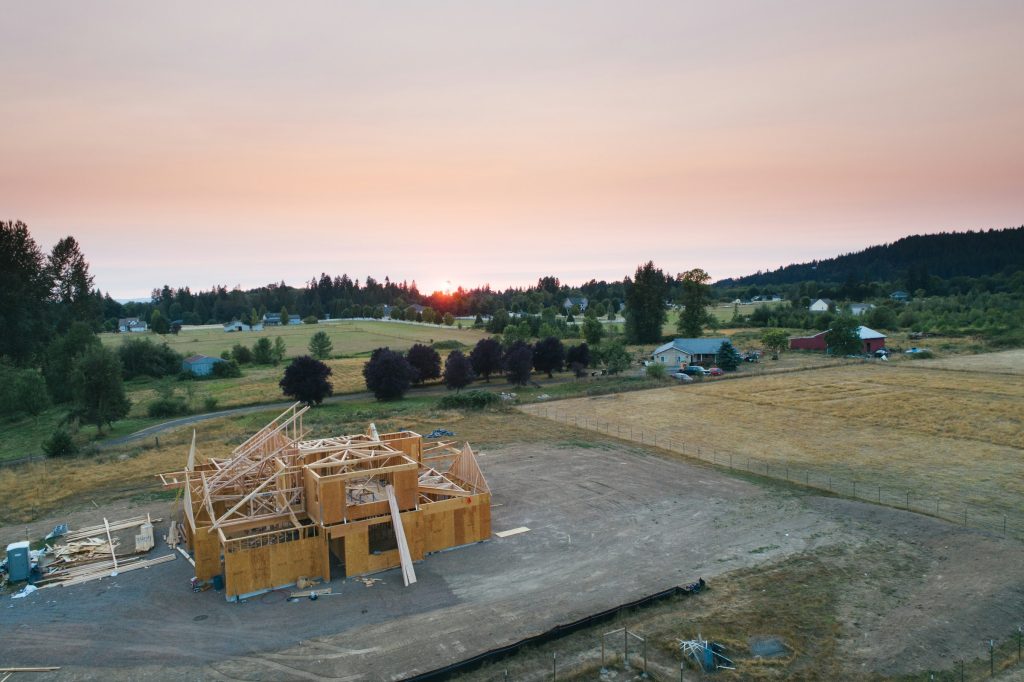
Featured image: Illustrative residential construction photograph, not a site included in the Census survey. Photo: Avel Chuklanov/Unsplash.