 Weekly Real Estate News

Summary
Trepp November 16 2026: $1.82B manufactured housing securitized hard maturities November 2026-December 2027, 227 whole loans, none delinquent or specially serviced; Fannie $891.6M, Freddie $807.2M. Primary https://www.trepp.com/trepptalk/manufactured-housing-hard-maturities-through-2027. Image 100617 Roger Starnes Sr/Unsplash 2880x1928.
A wave of commercial real estate loan maturities is approaching the manufactured-housing sector, but the loans involved show substantially less immediate stress than much of the conventional multifamily market. Trepp identified $1.82 billion of securitized manufactured-housing debt scheduled to reach hard maturity between November 2026 and December 2027, with none of the loans delinquent or in special servicing.
The November 16 analysis covers 227 whole loans represented by 239 loan pieces. A hard maturity means the borrower has exhausted contractual extension options and must repay the debt or negotiate another arrangement. The findings describe this specific securitized cohort, not every manufactured-housing community loan nationwide.
Agency debt accounts for most of the maturities
Fannie Mae accounts for $891.6 million of the scheduled balance, while Freddie Mac accounts for $807.2 million. Together, the agencies represent approximately 93% of the cohort. Conduit CMBS contributes $117.8 million and one CRE collateralized loan obligation contributes $1.7 million.






Only $45.2 million of the $1.82 billion has a debt yield below 8%, and $25.3 million falls below 6%, Trepp reported. Debt yield measures a property’s net operating income relative to its loan balance; lower yields can signal a more difficult refinancing equation. A loan’s ability to refinance also depends on rates, leverage, collateral values and lender requirements.
Comparison with conventional apartments
Within Freddie Mac’s securitized book, manufactured housing has $807.2 million of hard maturities and no delinquent balance in the measured period. The comparable conventional multifamily cohort totals $20.40 billion, with $63.8 million delinquent, or 0.31% of the balance. About 25.96% of conventional multifamily maturities have a debt yield below 8%, versus 4.13% for Freddie Mac manufactured housing.
Those comparisons are not evidence that manufactured-housing properties face no risk. Rent collections, operating expenses, insurance, property conditions and refinancing terms still matter. The figures do, however, indicate that the near-term maturities Trepp examined enter the refinancing window in a stronger payment position than many other property types.
What lenders and owners should watch
The next test is whether currently performing loans can repay or refinance when due. A borrower may remain current on monthly payments and still face a maturity shortfall if the new loan proceeds are insufficient to retire the old debt. WRE News has also covered broader commercial mortgage modification and delinquency trends, which provide context for the refinancing environment.
Primary source: Trepp, November 16, 2026.
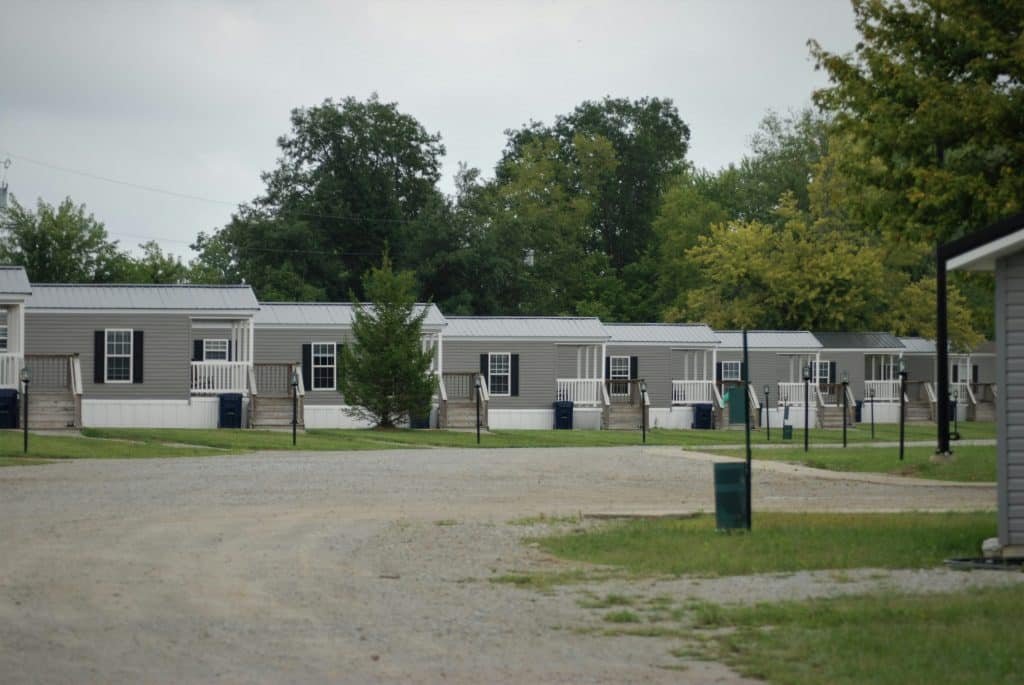
Illustrative photograph of modular housing: Roger Starnes Sr / Unsplash. The pictured homes are not identified as collateral in the study.