Weekly Real Estate News

Summary
Trepp identified $802 million in Chicago-area office debt tied to significant tenant leases expiring before loan maturity. Four buildings account for 78% of the exposure; two are already in foreclosure or more than 90 days delinquent.
Chicago office landlords face a difficult sequence: major tenants can leave before the debt on their buildings comes due. Trepp has identified $802 million in securitized loans associated with significant tenant lease expirations ahead of mortgage maturity, with a handful of properties accounting for most of the exposure.
The October 22 analysis covers 48 leases at 30 properties. Trepp counted a significant tenant as the building’s largest occupier or one leasing at least 10% of net rentable area. The median gap between lease expiration and loan maturity is about 20.5 months.
Those are loan balances associated with leases scheduled to expire. They are not projected losses, and a lease’s scheduled end does not establish that the tenant will vacate. Renewal negotiations, space reductions and replacement leasing can alter a property’s income before refinancing.






Four properties dominate the exposure
Four buildings account for roughly $623 million, or 78%, of the $802 million total. One North Wacker carries a $353 million loan, with PricewaterhouseCoopers occupying 20.67% of the property and a lease scheduled to expire in October 2028. The loan matures in October 2031 and was current in Trepp’s dataset.
At 100–150 South Wacker Drive, a $100 million loan is also current. Golub Capital Management’s lease for 10.94% of the property is scheduled to end in November 2028, well ahead of the loan’s February 2033 maturity.
The other two buildings face immediate credit problems. Westbrook Corporate Center, associated with an $85 million loan, is in foreclosure; Ingredion’s lease for 10.75% of the property is scheduled to expire in November 2027, roughly six months before loan maturity. Continental Towers, also with an $85 million loan, is more than 90 days delinquent. Verizon Wireless leases 17.55% of its space through April 2028, four months ahead of the loan’s scheduled maturity.
These examples show why the timing matters. A borrower whose largest tenant departs shortly before maturity may have limited opportunity to renovate the space, attract a replacement and demonstrate stable income to a new lender.
More than one measure of lease risk
Trepp’s headline $802 million calculation uses the largest tenant or tenants occupying at least 10% of a building. When the firm expands the search to leases held by the five largest tenants at each property, regardless of occupied percentage, the associated debt rises to about $2.16 billion across 44 properties.
Within the original 30-property group, five buildings have significant leases ending within six months of loan maturity and seven more within six to 12 months. The shortest-window group represents $123 million of debt; the six-to-12-month group adds $113 million.
The Field Building at 135 South LaSalle Street offers a warning from an earlier lease cycle. Bank of America left approximately 827,000 square feet there in 2020. Trepp reports that the 1.3 million-square-foot property is now 9% occupied and that its $100 million securitized loan has been in special servicing since November 2021. The owner is pursuing a partial residential conversion.
Leasing will determine the credit outcome
Chicago’s office market includes towers with very different tenant bases, amenities and capital needs. A strong lease renewal can protect a building’s debt-service capacity, while a large vacancy may force the owner to spend on tenant improvements at the same time financing costs remain high.
The exposure also comes against a national backdrop of uneven office demand. WRE recently covered Kilroy Realty’s leasing activity and occupancy and CBRE’s commercial property earnings. Neither result can substitute for building-by-building underwriting.
Trepp’s numbers give investors and servicers a list of approaching decision points. The next evidence will come from actual renewals, vacancy changes and loan workouts, especially at Westbrook Corporate Center and Continental Towers.
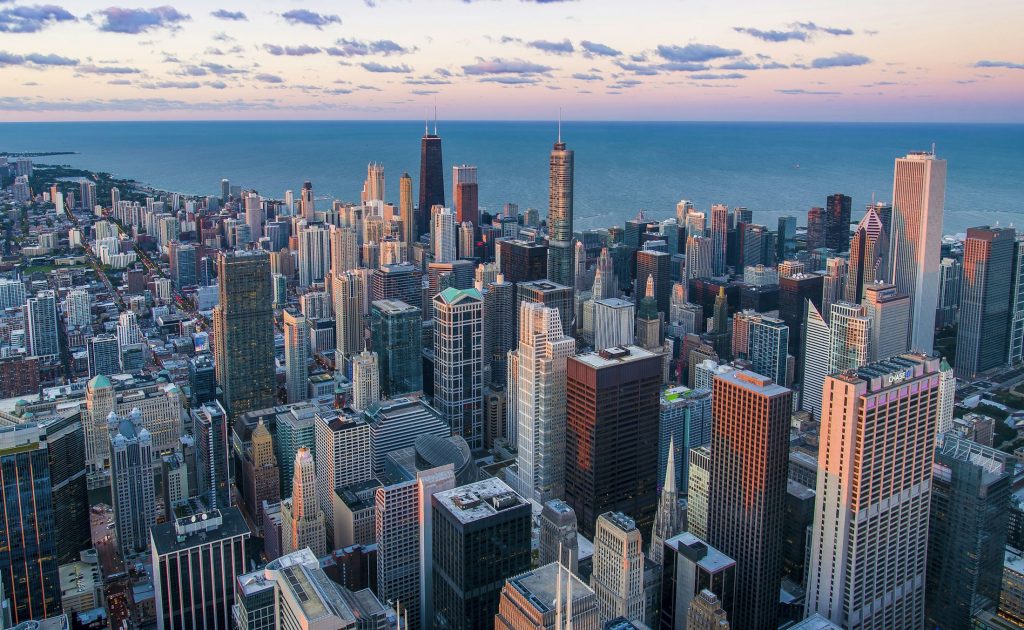
Source: Trepp, October 22, 2026. Photo: Pedro Lastra / Unsplash, Chicago skyline; illustrative, not a specified collateral building.