 Weekly Real Estate News

Summary
Cavco will debut the Grande Arbor, which it says is the first HUD-code manufactured home built without a permanent steel chassis. The model follows Congress' July removal of the federal chassis mandate and tests whether chassis-free construction can help factory-built homes integrate into more traditional neighborhoods and development types.
A federal rule change that looked technical on paper is already changing what a manufactured home can look like on the ground.
Cavco Industries said Thursday it will debut the Grande Arbor, which the company describes as the first manufactured home built to the U.S. Department of Housing and Urban Development Code without a permanent steel chassis. The home is scheduled to appear at HUD’s 2026 Innovative Housing Showcase on the National Mall in Washington, D.C., Sept. 22-24.
The distinction matters because a permanent steel chassis has been a defining construction requirement for HUD-code manufactured housing for decades. Congress eliminated that federal mandate in July through the bipartisan 21st Century ROAD to Housing Act, opening the door to homes that can sit lower to the ground and more closely resemble site-built housing.
Cavco said the change can provide more design flexibility, including the potential for multistory construction, and make HUD-code homes easier to integrate into traditional neighborhoods and urban or suburban developments.
A new test of manufactured housing’s boundaries
The Grande Arbor is not simply a conventional manufactured home with the frame removed. Cavco is using the new construction flexibility to pair the chassis-free design with a floor plan aimed at multigenerational households. Two primary suites sit at opposite ends of the home, connected by shared kitchen, dining and living areas.
That layout targets a housing need that extends well beyond manufactured housing. Older parents living with adult children, adult children returning home and households combining resources to manage housing costs have all contributed to increased interest in multigenerational designs.
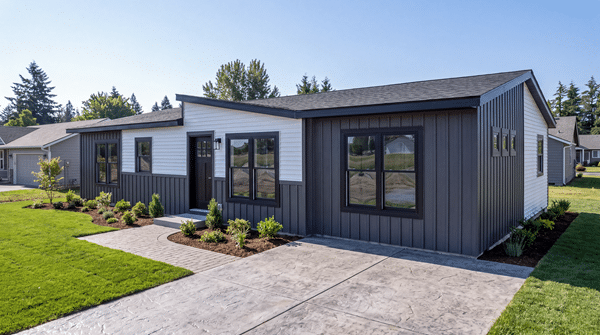
Cavco is co-exhibiting the home with UMH Properties. The unit was built by Cavco’s Rocky Mount, Virginia, operation, which in 2023 introduced the Anthem, a nationally available manufactured duplex approved by HUD.
Why the chassis change matters
Manufactured housing has long occupied an unusual position in the U.S. housing system. Homes built to the federal HUD Code can be produced in factories at scale, but local zoning, financing practices, installation requirements and perceptions about manufactured housing can limit where those homes are placed.
Removing the permanent chassis requirement does not erase those local barriers, and Cavco’s announcement should not be read as proof that communities will automatically allow chassis-free manufactured homes. Zoning and land-use decisions remain local, and financing and appraisal practices will also matter.
But the construction change removes one federal constraint that has helped visually and structurally separate manufactured housing from conventional site-built homes. A lower-profile installation may make the homes easier to place in neighborhoods where traditional manufactured-home appearance has been a political or aesthetic obstacle.
The timing is significant. Builders are confronting high land, labor and financing costs while policymakers are looking for ways to expand housing supply without relying solely on conventional site-built construction. Factory-built housing is increasingly part of that conversation.
The next question is scale
Cavco has not announced pricing, production volume or a broad commercial rollout schedule for the Grande Arbor. The company’s claims about lower-profile installation, market access and design flexibility describe potential advantages; they do not establish how local governments, lenders, appraisers or buyers will respond.
That makes the National Mall debut more than a product showcase. It is an early public test of what manufacturers can do with the regulatory flexibility Congress just created.
Cavco is one of the largest U.S. manufactured and modular home producers by reported wholesale shipments. Its CountryPlace Mortgage subsidiary finances manufactured and modular homes, while Standard Casualty provides property and casualty coverage to manufactured homeowners.
If chassis-free HUD-code construction moves beyond demonstration models and into meaningful production, the change could blur a line that has separated manufactured housing from other forms of residential construction for generations. For an industry trying to build more attainable housing, that is the part worth watching.



I’m confused…while is a manufactured home without a chassis not an existing modular home.