 Weekly Real Estate News

Summary
Hammack says inflation remains too high and monetary policy should stay restrictive; her remarks are not an announced Federal Reserve decision.
Cleveland Federal Reserve President Beth Hammack said Monday that monetary policy needs to remain restrictive to bring inflation back to the central bank’s 2% target, arguing that smaller adjustments made relatively quickly may be preferable to waiting until larger action is necessary.
Her remarks at the National Association for Business Economics annual meeting in Cleveland came as the inflation outlook remains a concern for mortgage lenders, homebuilders and borrowers facing elevated financing costs. Hammack described inflation as broad-based and said stronger-than-expected economic activity and a relatively steady labor market give policymakers room to focus on price stability.
“Considering all the inputs that factor into my reaction function, a restrictive monetary policy stance is appropriate to ensure a timely return to 2 percent inflation,” Hammack said in her October 12 speech.
Hammack reported that headline personal consumption expenditures inflation was 3.4% in August, compared with 2.7% a year earlier. Core PCE inflation, which excludes food and energy, was 3.0%, up from 2.9% a year earlier. Those readings, she said, show price pressures that cannot be explained by energy costs alone.
She pointed to successive tariff-related cost increases and demand-side pressures that could prove persistent. She also described hearing from a retailer that expects to raise prices by more than its current increase in input costs, anticipating additional inflation ahead. Hammack presented that account as anecdotal evidence of a risk that businesses and consumers could begin to expect higher inflation as normal.
Why housing finance is watching
For housing professionals, the immediate significance is the possibility of a longer period of restrictive monetary policy. The Federal Reserve does not set mortgage rates directly. Lenders price mortgages in response to longer-term bond yields, mortgage-backed securities markets, credit conditions and other factors. But expectations about the Fed’s policy path can influence those markets and the cost of financing homes and development projects.
Hammack said a recent rise in bond yields has left financial conditions looking neutral to her rather than meaningfully restrictive. She attributed the move to several possible influences, including expectations of stronger growth and higher policy rates, energy costs, geopolitical uncertainty and global government debt issuance. She did not claim that any single factor explained the change.
Her assessment of employment also differed from a picture of an economy in immediate need of rate relief. She cited a 4.2% unemployment rate and described the labor market as stable. She said investment in artificial-intelligence infrastructure was contributing to shortages and wage increases in some construction trades, while contacts in her district continued to report strong business conditions.
That observation does not establish a nationwide housing-construction labor trend. It does, however, illustrate one channel through which spending on data centers and related infrastructure may compete for skilled workers and add to costs in some markets.
A policy preference, not a Fed decision
Hammack stressed that she was describing how she weighs economic information, not promising a particular sequence of interest-rate decisions. She said that when feasible, she prefers smaller policy adjustments made relatively quickly over waiting for conditions to demand a larger correction. If employment weakens convincingly, she said, policy would need to respond; inflation that stays elevated could call for greater restraint.
The remarks represent Hammack’s views, not a new decision by the Federal Open Market Committee. The Cleveland Fed’s accompanying release emphasized that distinction. For mortgage companies and builders, the question is whether forthcoming inflation and employment reports reinforce her case for restraint or change the balance of risks before the Fed’s next policy decision.
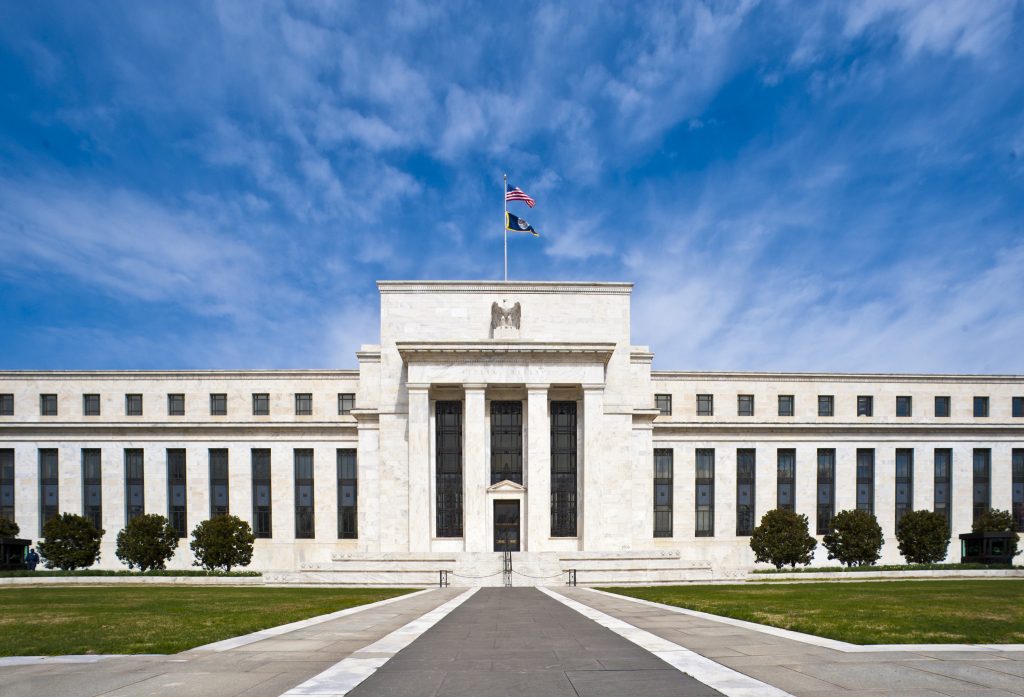
Photo: Marriner S. Eccles Federal Reserve Board Building, Washington, D.C. Official Federal Reserve photograph by Britt Leckman, public domain. Image source and licensing.



.jpg)