 Weekly Real Estate News

Summary
Federal prosecutors allege Stagg Group failed to meet Fair Housing Act accessibility requirements at six apartment buildings in the Bronx and New Rochelle. The complaint seeks retrofits, damages and a civil penalty; the allegations have not been proven in court.
The Justice Department has sued New York real estate developer Stagg Group, alleging that six apartment buildings containing a combined 607 units were designed and constructed with features that fail to meet the Fair Housing Act’s accessibility requirements for people with disabilities.
The lawsuit announced Friday by the U.S. Attorney’s Office for the Southern District of New York targets five properties in the Bronx and one in New Rochelle. The government’s 11-page federal complaint alleges deficiencies in individual apartments as well as entrances, common areas, parking, mailboxes and other facilities.
The allegations have not been adjudicated, and the filing of a complaint is not a finding that Stagg violated federal law. The case was filed Sept. 25 in U.S. District Court for the Southern District of New York as United States of America v. Stagg Group, case No. 1:26-cv-08372.






WRE News did not find a public response from Stagg Group to the allegations in its review of available materials.
Six properties and 607 apartments
The properties identified by federal prosecutors are Riverdale Tower at 3745 Riverdale Ave.; The Station at 5959 Broadway; The Hudson at 6327 Broadway; The Stables at 6375 Broadway; The Equestrian at 1680 Pelham Parkway South, all in the Bronx; and West View at 26 Garden St. in New Rochelle.
According to the complaint, Riverdale Tower contains 89 units, The Station 72, The Hudson 90, The Stables 42, The Equestrian 129 and West View 185. All six are elevator buildings and were constructed for first occupancy after the Fair Housing Act’s accessibility provisions became applicable to covered multifamily housing.
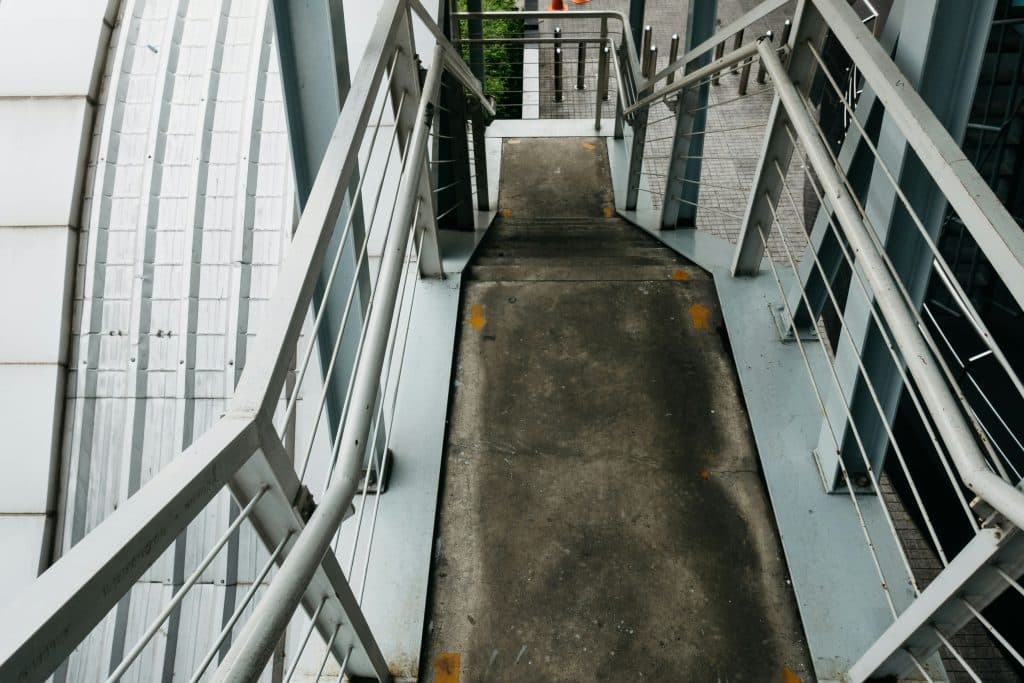
The government alleges that inspections identified different accessibility problems at different properties. At Riverdale Tower, for example, prosecutors cite an excessively steep ramp without a handrail at an outdoor entertainment area, inadequate maneuvering space in a studio bathroom and alleged parking deficiencies. At The Station, the complaint cites thresholds that are too high, a bathroom doorway it says is too narrow, outlets positioned too low and a fitness center accessible only by stairs.
At The Hudson, the government alleges a balcony doorway is too narrow and its threshold too high and unbeveled. Allegations at The Stables include high thresholds and an inaccessible thermostat. At The Equestrian, prosecutors cite a front entrance door that allegedly requires excessive force to open, mailboxes mounted too high, problems along an accessible route and inaccessible features in trash and pet areas.
West View, the largest of the six properties, is alleged to have a curb ramp with an excessive running slope and obstructions that prevent an accessible route into its laundry room.
Government says the issue may extend beyond inspected buildings
The complaint also identifies four other multifamily properties in which Stagg allegedly participated in design and construction: 1001 Whitlock Ave. and 410 E. 203rd St. in the Bronx, 21-07 Astoria Blvd. in Queens and 223 Willett Ave. in Port Chester.
That portion of the filing requires an important distinction. The Justice Department does not list those four properties among the six inspected buildings or identify the same property-specific deficiencies there. Instead, prosecutors allege that the pattern described in the complaint “may extend” to those properties and other Stagg developments.
The government is asking the court to require retrofits of covered dwelling units and public and common-use areas, require measures intended to ensure compliance in future construction and order compliance surveys. Prosecutors are also seeking monetary damages for people the court determines were harmed and a civil penalty. The complaint does not state a specific dollar amount for damages or the requested penalty.
Fair Housing Act design requirements remain an enforcement issue
The Fair Housing Act requires covered multifamily housing built for first occupancy after March 13, 1991, to incorporate specified accessibility and adaptable-design features. Among them are accessible public and common-use areas, doors wide enough for wheelchair passage, accessible routes into and through units, accessible environmental controls, bathroom-wall reinforcement for grab bars and usable kitchens and bathrooms.
“Every New Yorker should be able to enjoy their homes, regardless of whether they have disabilities,” U.S. Attorney Jamie McDonald said in announcing the case. McDonald said the Southern District of New York has brought 21 lawsuits over the past two decades against developers, architects and construction companies involving Fair Housing Act design-and-construction requirements.
The enforcement action also arrives during a year in which federal policy surrounding Fair Housing Act design-and-construction claims has been changing. Earlier this month, WRE News reported that HUD updated its guidance on limitations periods for accessibility-related complaints, rescinding earlier agency guidance and stating that administrative complaints generally must be filed within one year of construction completion and private federal lawsuits within two years.
The Stagg case, however, is an enforcement action brought by the United States under a different Fair Housing Act provision authorizing the attorney general to pursue alleged patterns or practices of discrimination or matters of general public importance. The government specifically invokes that authority in its complaint.
What happens next will turn on Stagg’s response and the federal court process. As of the initial docket, the case consisted of the government’s complaint, civil cover sheet and a request for issuance of a summons. No judicial finding on the merits had been entered.