 Weekly Real Estate News
Florida voters approved a sweeping change to the state’s property-tax system Tuesday, voting to expand homestead exemptions and tighten the limit on annual assessment increases for non-homestead property. The outcome promises substantial relief for some homeowners while raising difficult questions about how cities and counties will finance services.
Unofficial November 3 returns published by the Florida Division of Elections show 4,905,633 votes in favor of Amendment 3, or 62%, and 3,006,325 opposed, or 38%. Constitutional amendments require at least 60% approval. The totals remain unofficial pending certification.
The result is a decisive new development in a proposal that has been debated for months, including litigation over the ballot summary and competing campaigns from real estate groups and local-government advocates.
What homeowners will receive
Under the official constitutional amendment text and summary, the homestead exemption applicable to non-school property taxes rises to $150,000 in 2027 and $250,000 in 2028, with inflation adjustments thereafter. The amendment takes effect January 1, 2027.



That distinction matters: the measure does not abolish school property taxes or erase every homeowner’s tax bill. The expanded exemption applies to qualifying homesteads and to non-school levies. Savings will vary with assessed values, local millage rates and individual eligibility.
The amendment also introduces a significant limitation for newcomers. People who were not Florida residents on December 31, 2026, will initially receive the existing homestead exemption upon qualifying; the expanded benefit begins with the fifth year of exemption, subject to federal constitutional constraints. Prospective buyers relocating to Florida should not assume they immediately qualify for the full new exemption.
Investment properties and commercial real estate are affected, too
Amendment 3 reduces the annual cap on assessment increases for non-homestead properties from 10% to 5%. That provision matters to owners of rental homes, second homes and certain commercial properties, although the actual tax effect depends on assessment rules, local rates and the property’s circumstances.
A lower assessment-growth ceiling can provide more predictability for existing property owners. It does not necessarily translate into an equivalent reduction in the tax bill, and it does not change a property’s purchase price or financing costs.
Local-government budgets face a difficult adjustment
Opponents have warned that cities and counties may face pressure to reduce services, restructure budgets or seek other sources of revenue. Supporters argue that homeowners need relief from property taxes that have risen alongside housing values.
A state economic analysis cited in election coverage estimated nearly $5 billion in lost local-government revenue in the first fiscal year, approaching $9 billion the next year and nearly $12 billion annually once fully implemented. These are estimates, not realized losses; local responses and actual collections may differ. WUSF reported the estimates and the election outcome.
The constitutional text also addresses how counties and municipalities may use property-tax revenue and provides mechanisms for further local homestead relief under specified procedures. Those provisions will require close attention as officials implement the amendment.
What the result means for the housing market
Lower recurring ownership costs may improve affordability for some established Florida homeowners, but the effect on new buyers will not be uniform. A relocating household facing the five-year qualification provision may have a different tax outlook from a longtime resident. Property-tax changes also interact with homeowners insurance, mortgage payments, HOA fees and purchase prices.
Real estate professionals should be especially careful about advertising estimated savings. A buyer’s tax obligation may change after a sale, and an exemption enjoyed by the seller may not carry over to the purchaser. Buyers should consult county property appraisers and qualified tax professionals rather than rely on a seller’s current tax bill.
The larger question is whether lower taxes improve long-term housing affordability without eroding the local services and infrastructure that support property values. Florida voters have settled the constitutional question at the ballot box, but the practical fiscal and housing-market consequences will unfold over several years.
What happens next
Election officials must complete the certification process. The amendment’s effective date is January 1, 2027, and its homestead exemption expands in stages. Local governments, property appraisers and state lawmakers will have to interpret and administer the new requirements.
WRE News will monitor official implementation guidance, local budget responses and any litigation over the amendment’s application. For now, the confirmed development is the November 3 vote exceeding the required threshold—not final certified totals or guaranteed dollar savings for every homeowner.
Simple Content Summary
Florida voters approved Amendment 3 on November 3, 2026, with 62% support in unofficial state returns. The amendment expands the non-school homestead property-tax exemption to $150,000 in 2027 and $250,000 in 2028 and reduces the annual assessment-growth cap on non-homestead property from 10% to 5%. The measure could lower taxes for eligible homeowners and some property owners while reducing local-government revenue. Final certification, individual savings and fiscal outcomes remain pending.
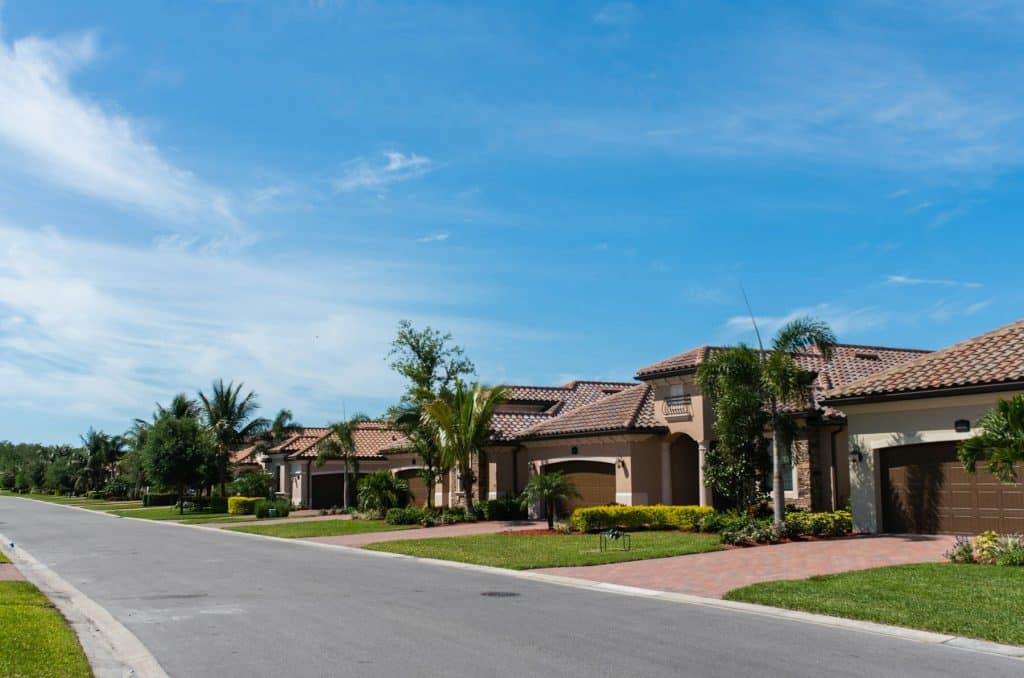
Featured image: Illustrative residential street photograph by FilterGrade via Unsplash; not an election-site photograph.