Weekly Real Estate News


Summary
Gantry says it arranged $1.68 billion of commercial mortgage loans across 101 transactions and 66 lenders in Q3 2026, reaching $3.9 billion year to date. Life insurers represented over 73% of quarterly volume; the firm services about $23 billion.
Commercial mortgage banker Gantry arranged approximately $1.68 billion of loans during the third quarter, bringing its reported 2026 production to $3.9 billion through September. The San Francisco-based firm said life insurance companies accounted for more than 73% of its latest quarterly volume, a sign of how strongly that lender group competed for commercial property debt despite unsettled interest rates.
The figures come from Gantry’s October 21 production report. They describe transactions arranged by one mortgage banking company, not nationwide commercial real estate lending. Gantry did not publish independently audited loan-level records with the announcement.
Its teams completed 101 transactions involving 66 lenders in the quarter. Dividing reported production by the transaction count produces an average of roughly $16.6 million per deal, although the actual loans vary considerably in size and property type. The lender roster included banks, agencies, credit unions, conduit lenders, debt funds and private capital alongside insurers.






Life company lenders’ share is particularly notable. Insurers typically seek long-term investments that match their liabilities and have often favored stable properties with predictable income. Their strong showing in Gantry’s portfolio does not mean banks or commercial mortgage-backed securities lenders have withdrawn from the market. It reflects the mix of borrowers and assets that this firm financed.
Gantry-reported measure
Amount
Third-quarter loan production
$1.68 billion
Year-to-date production
$3.9 billion
Q3 transactions
101
Q3 lenders involved
66
Life insurer share of Q3 production
More than 73%
Separate servicing portfolio
About $23 billion
Office financing reappears in the transaction mix
Gantry identified a $96 million bridge refinancing of a San Francisco office property among representative transactions. It also cited a $110 million industrial and office portfolio refinancing spanning Southern California and Texas, and $412 million of construction-to-permanent financing for medical office projects in Texas, Utah and Virginia.
Those examples are useful because office lending has faced more difficult underwriting than many other property categories since the pandemic. A bridge loan can provide time to lease space or stabilize operations, but its maturity may create another refinancing challenge. The announcement does not disclose the borrowers, loan-to-value ratios, pricing or debt-service coverage for these representative deals, preventing a transaction-by-transaction assessment of risk.
Medical office financing occupies a different part of the property market. The income characteristics of a medical building depend on its tenants, lease terms, location and operating arrangements. Gantry’s $412 million figure covers multiple projects; it should not be read as a single loan or a national measure of healthcare-property demand.
The company said multifamily, retail and industrial assets made up the majority of its transactions. Other disclosed financings included an $86 million self-storage bridge loan spanning three southeastern states and permanent apartment refinancings in Minnesota and the Pacific Northwest. These examples show activity across several sectors, although the company did not supply a complete asset-class breakdown of the $1.68 billion.
Production growth needs context
Gantry reported more than $2.735 billion in production and related equity placements through the third quarter of 2025. The current $3.9 billion figure is substantially higher. Because the earlier announcement included related equity placements and the company has not provided a reconciled like-for-like series, the comparison should not be presented as a precise growth rate for mortgage originations alone.
Its servicing operation is a separate business from new loan placement. Gantry reported an internally managed servicing portfolio of approximately $23 billion, covering commercial properties across several sectors. That balance is not additional third-quarter lending, nor does the release establish a delinquency rate for the serviced loans. Management characterized portfolio performance as strong without providing enough underlying data for an independent credit assessment.
The report comes against a more complicated capital-market backdrop. In its October 20 market review, the CRE Finance Council described wider spreads in several commercial mortgage securities markets and more difficult refinancing conditions for some office and apartment debt. Those observations concern broader markets and do not contradict Gantry’s experience securing financing for individual clients.
Financing availability is only part of the equation. A lender can be willing to provide a loan while offering less leverage, requiring additional equity or demanding a structure that changes an owner’s returns. Gantry’s own commentary acknowledged that equity investors have become more selective and that borrowers increasingly seek rate locks ahead of known maturities.
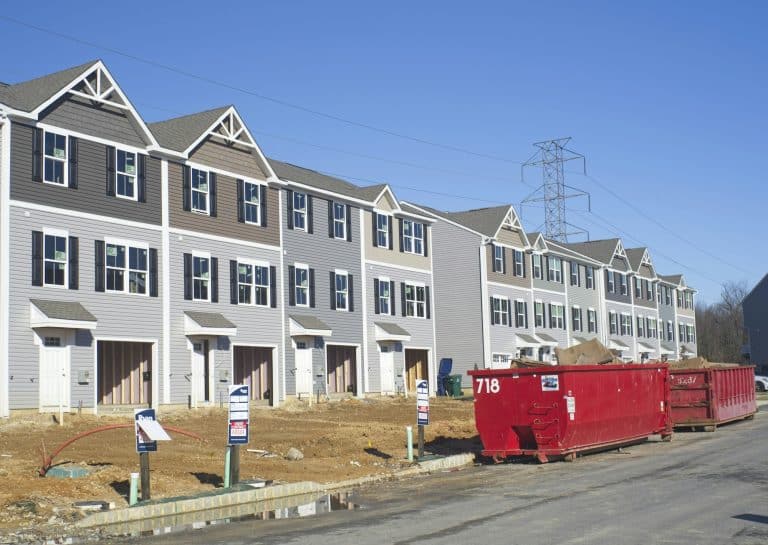
Featured image: Abbe Sublett / Unsplash. Illustrative commercial buildings; not a property identified in Gantry’s loan portfolio.
For owners with debt maturing in 2027, the practical lesson is to compare available lender structures early. The company’s reported volume demonstrates that capital remains accessible for properties meeting lender standards. It does not establish that every asset can refinance at its existing loan balance, especially where operating income or valuations have deteriorated.