Weekly Real Estate News


Summary
Stockland net residential lot sales fell 29% in the September 2026 quarter. Buyer inquiries fell 71%, although the company maintained full-year earnings and settlement guidance.
In brief: Australian developer Stockland’s October 19 trading update reveals a sharp retreat in buyer demand for residential land, even as the group holds its full-year earnings outlook. The divergence between inquiries, sales and settlements is an early warning for housing development pipelines, not evidence that completed home construction has already fallen by the same amount.
Stockland reported 1,506 net sales in its masterplanned communities for the three months ended September 30, 2026, down 29% from 2,117 a year earlier. Inquiries fell from 36,551 to 10,452, a decline of about 71%, according to the company’s October 19 filing to the Australian Securities Exchange. The announcement was released at 9:33 a.m. Sydney time on October 19, equivalent to late afternoon October 18 in the U.S. Mountain time zone.
Demand cools, but contracts provide a cushion
Stockland attributed weaker demand to higher interest rates, tax changes and affordability pressures. Queensland demand moderated, New South Wales buyers remained constrained by prices, Western Australia became more balanced as supply caught up with demand, and Victoria was relatively steady at subdued levels. The developer said a higher conversion rate from inquiries to sales partly offset the fall in customer traffic, and cancellations and defaults remained below long-term averages.






The company completed 828 masterplanned-community settlements during the quarter and held 4,502 contracts on hand. That backlog matters: sales represent new demand, while settlements recognize transactions completed from earlier contracts. A weak quarter of sales can therefore take time to appear in reported earnings or construction activity.
Guidance held despite the slowdown
Stockland maintained fiscal 2027 funds-from-operations guidance of 38 to 39 Australian cents per security and its expected distribution of 25.2 cents. It continues to target 7,300 to 8,300 masterplanned-community lot settlements for the full financial year. Those are management forecasts, not guaranteed results, and the company said earnings are weighted toward the second half.
The group’s commercial portfolio provides some diversification. Logistics leasing volume rose to 121,199 square meters from 66,244 a year earlier, and the company reported leasing spreads of 17.6%. Its data-center development pipeline includes roughly 450 megawatts of secured power, subject to project documentation and other conditions. Stockland expects some fiscal 2027 earnings contribution from data-center land transactions, but that is not equivalent to completed operating facilities.
What the figures mean for housing
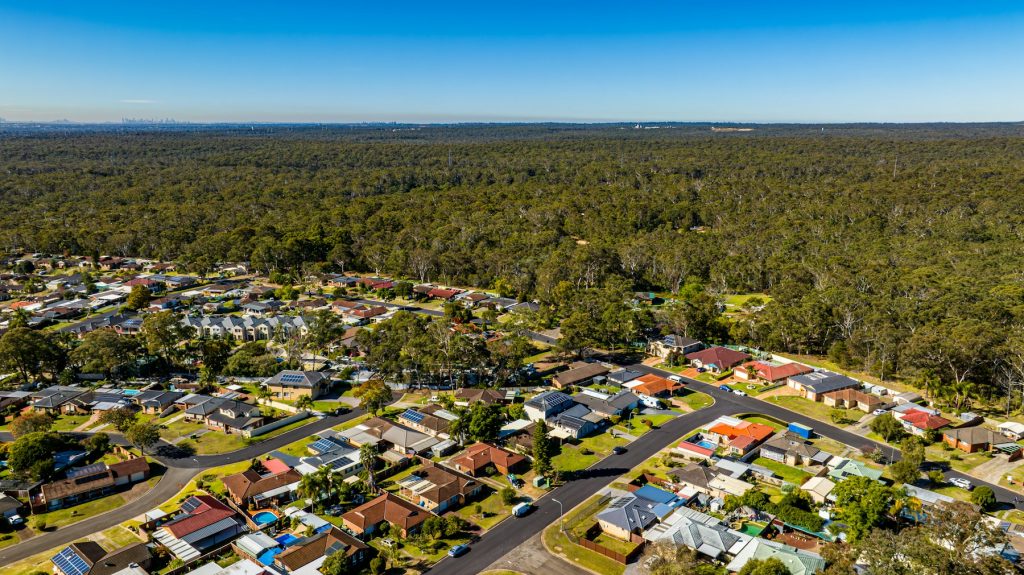
The residential decline comes as Australian developers face higher financing costs and a more selective customer base. It does not mean home prices nationally fell 29%: the figure measures Stockland’s net lot sales, not the value of housing or the number of all Australian property transactions.
For U.S. homebuilders and institutional housing investors, the report offers a comparable warning about the lag between weaker buyer traffic and reported completions. Land developers can maintain near-term settlements from their backlog while future sales pipelines deteriorate. The key indicators to watch next are Stockland’s new inquiries, cancellation rates, contracted backlog and its ability to meet the second-half settlement target.