Weekly Real Estate News

Summary
CoStar's October 30 forecast places U.S. industrial vacancy at 7.3% through 2027, with projected 2027 completions of 243 million square feet and absorption of 204 million. The figures are projections subject to construction and demand uncertainty.
U.S. industrial-property vacancy is expected to remain at 7.3% through 2027, according to a revised forecast released Friday by CoStar Group. The outlook assumes a recovery in warehouse leasing will continue, even as new construction is projected to exceed demand again next year.
CoStar reported a national vacancy rate of 7.3% in the third quarter of 2026 and expects that figure to hold through the end of 2027 before easing in 2028. Its October 30 forecast announcement described a modestly improved demand picture after industrial leasing recovered from weaker activity earlier in the year.
The projected stability comes with a significant qualification. CoStar expects approximately 243 million square feet of industrial completions in 2027 against 204 million square feet of net absorption, a potential 39 million-square-foot excess of new supply over occupied demand. The firm anticipates demand will outpace deliveries for the remainder of 2026 before that balance reverses.






Net absorption measures the change in occupied space, while completions add new inventory. Neither is equivalent to gross leasing activity. A market can record stronger leasing and still struggle to reduce vacancy when deliveries arrive faster than tenants occupy space.
A leasing recovery meets another construction cycle
Juan Arias, CoStar’s national director of industrial analytics, said third-quarter tenant demand exceeded new supply and helped prevent vacancy from rising further. The firm expects healthier conditions in the near term than it did in its previous forecast.
That improvement does not eliminate exposure to speculative development. Groundbreakings have risen from recent lows, according to CoStar, and the firm’s outlook would weaken if developers continue adding capacity faster than users need it. Midsize logistics properties are among the segments it identifies as vulnerable to an extended period of elevated vacancy.
CoStar also cited trade uncertainty, volatile import volumes, transportation costs, pressure on corporate margins and the sluggish housing market as possible drags on industrial space demand. Distribution facilities serving consumer goods and building materials can be affected by changes in spending and construction activity, though the effects differ by market and tenant.
The national forecast masks important differences among ports, inland distribution hubs and infill industrial districts. Availability in a newly built logistics corridor can behave very differently from space near an established population center with limited land for expansion. The release does not provide enough market-by-market detail to treat 7.3% as a reliable vacancy projection for any particular city.
Recent company results illustrate how uneven commercial property conditions remain. STAG Industrial reported higher rent spreads alongside its third-quarter occupancy and acquisition figures, but a single REIT’s portfolio cannot establish the national vacancy trend. CoStar’s figures cover the broader U.S. industrial market.
What the 2027 outlook means for owners and lenders
For industrial landlords, a stable vacancy forecast suggests the leasing environment may stop deteriorating nationally, but it does not guarantee rent growth or eliminate concessions. Owners with near-term lease expirations still face local competition, tenant credit risk and the possibility of slower backfilling in areas with heavy construction.
For lenders and investors, the 39 million-square-foot projected gap between completions and absorption is an important sensitivity rather than a predetermined surplus. Forecasts depend on future tenant demand, construction schedules and economic conditions. Delayed projects, stronger-than-expected leasing or a change in trade flows could materially alter the outcome.
CoStar said the balance of risks remains tilted toward a slower recovery. Its October 30 update is a forecast, not a final measurement of 2027 activity; the observed third-quarter vacancy rate is the current-data anchor for that projection.
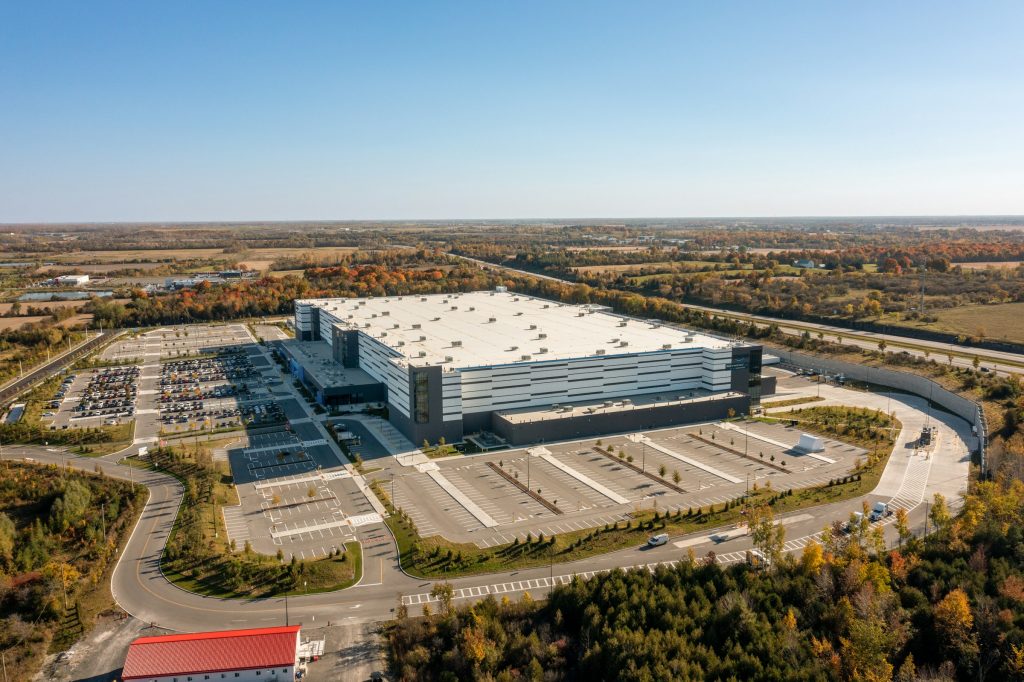
Source: CoStar Group, October 30, 2026 industrial market forecast. Image: illustrative industrial property photograph, Point3D Commercial Imaging Ltd. / Unsplash.
Simple Content Summary
CoStar forecasts that U.S. industrial vacancy will remain around 7.3% through 2027. Its projection anticipates 243 million square feet of completions against 204 million square feet of net absorption next year, underscoring the risk of excess supply.