Weekly Real Estate News

Summary
D.R. Horton signed a multiyear agreement with Promise Robotics to support more than 1,250 homes using AI-directed factory manufacturing of construction components. The companies did not disclose contract value, production dates or independently verified cost savings. The arrangement tests industrialized homebuilding at a major national builder.
D.R. Horton has signed a multiyear agreement to use robotic manufacturing for components in more than 1,250 homes, giving a construction-automation company its first major U.S. homebuilder customer at a time when builders are under pressure to cut costs without sacrificing production capacity.
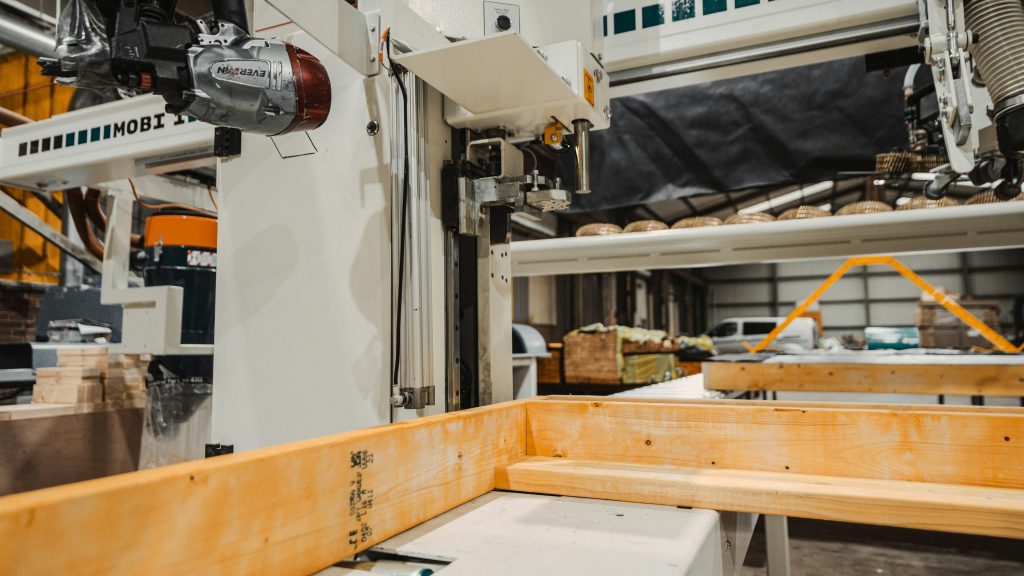
The agreement with Toronto-based Promise Robotics, announced Tuesday, gives D.R. Horton access to a Factory-as-a-Service system that converts existing home designs into manufacturing instructions, coordinates robotic fabrication and connects factory-made components with installation at construction sites. Promise said the arrangement would support production of more than 1,250 homes as it expands its U.S. manufacturing network.
The companies did not disclose the contract value, production schedule, unit costs or independently measured savings. The announcement describes a commercial commitment to support future home production, not 1,250 completed houses.






Brad Conlon, D.R. Horton’s senior vice president of strategic growth and innovation, said the builder is seeking shorter construction cycles, greater capacity and more predictable operations. “Promise Robotics’ integrated platform gives us a new capability to support those goals,” Conlon said in the announcement.
Why a 1,250-home agreement matters to a builder of Horton’s size
The planned volume is modest beside D.R. Horton’s national output. The company closed 23,983 homes in its fiscal third quarter ended June 30, according to its July earnings release. For fiscal 2026, it forecast between 83,800 and 84,300 home closings. The Promise agreement therefore represents roughly 1.5% of one year’s projected closings, although the multiyear production period means that comparison is illustrative rather than a statement about annual capacity.
Its significance lies in the size of the customer and the way the technology is being sold. D.R. Horton operates across 126 markets in 36 states, and its divisions must coordinate land development, materials, subcontractors, permits and closings. A factory process that works for a single standardized design is not automatically economical across that range of homes and local building codes.
Promise’s service model is designed to spare builders the expense of owning and operating robotic plants. It takes plans already used by a builder and translates them into instructions for producing structural components. The company says that approach can help builders adopt automation without redesigning their entire business around a factory.
That still leaves the hardest economic questions unanswered. The factory must have enough orders to spread its fixed costs across production. Components must reach jobsites at the right time and fit local specifications. Onsite crews and inspectors must be ready to accept the work. Faster fabrication will not shorten the overall construction cycle if permitting, site preparation or later trades remain the bottleneck.
The economics remain unproven
D.R. Horton’s own financial results show why builders are looking for new efficiencies. In the June quarter, the company reported a 20.7% home-sales gross margin and a 20% order-cancellation rate, up from 17% a year earlier. Its executive chairman, David Auld, said affordability constraints and cautious buyers continued to affect demand and that sales incentives were expected to remain elevated in the fourth quarter. Those figures come from the builder’s quarterly earnings materials, not from the Promise agreement.
Against that backdrop, a reliable reduction in framing time could be valuable. Yet neither party has published an audited per-home cost comparison between Promise’s process and conventional construction. The agreement does not establish that buyers will pay less, that margins will improve or that the company can profitably replicate its model across multiple U.S. markets.
Construction automation also has a difficult history. Factory-based homebuilding companies have struggled when expensive plants required high utilization but orders fluctuated with the housing cycle. Katerra, one of the best-known attempts to industrialize residential construction, filed for bankruptcy in 2021. Promise’s narrower component-manufacturing and service approach may reduce some risks, but it does not eliminate capital intensity, transportation costs or dependence on steady builder demand.
Promise previously partnered with Mattamy Homes in Alberta and opened a 60,000-square-foot Calgary facility in 2025. Those earlier operations provide experience in factory production but do not by themselves validate the economics of a U.S. expansion.
D.R. Horton has pursued other construction innovations as well. WRE previously covered its investment in a 3D-printing construction company. The new arrangement is distinct: Promise is supplying manufacturing capacity and workflow integration rather than asking D.R. Horton to operate an entire new construction method itself.
What to watch next
For builders, lenders and land developers, the useful measures will be the number of homes actually produced, delivered component costs, changes in total construction time and the consistency of quality and inspection outcomes. Promise’s production model may also require sufficient local order density to keep a plant operating efficiently through a downturn.
Neither company has provided a public schedule for when the 1,250-plus homes will be completed or a financial return target. The agreement is a consequential commercial test of robotic homebuilding at national-builder scale. Whether it changes the economics of housing construction will depend on results that have not yet been reported.